 By Ben Jimenez
·
Carrollton, TX
·
October 16, 2026
By Ben Jimenez
·
Carrollton, TX
·
October 16, 2026
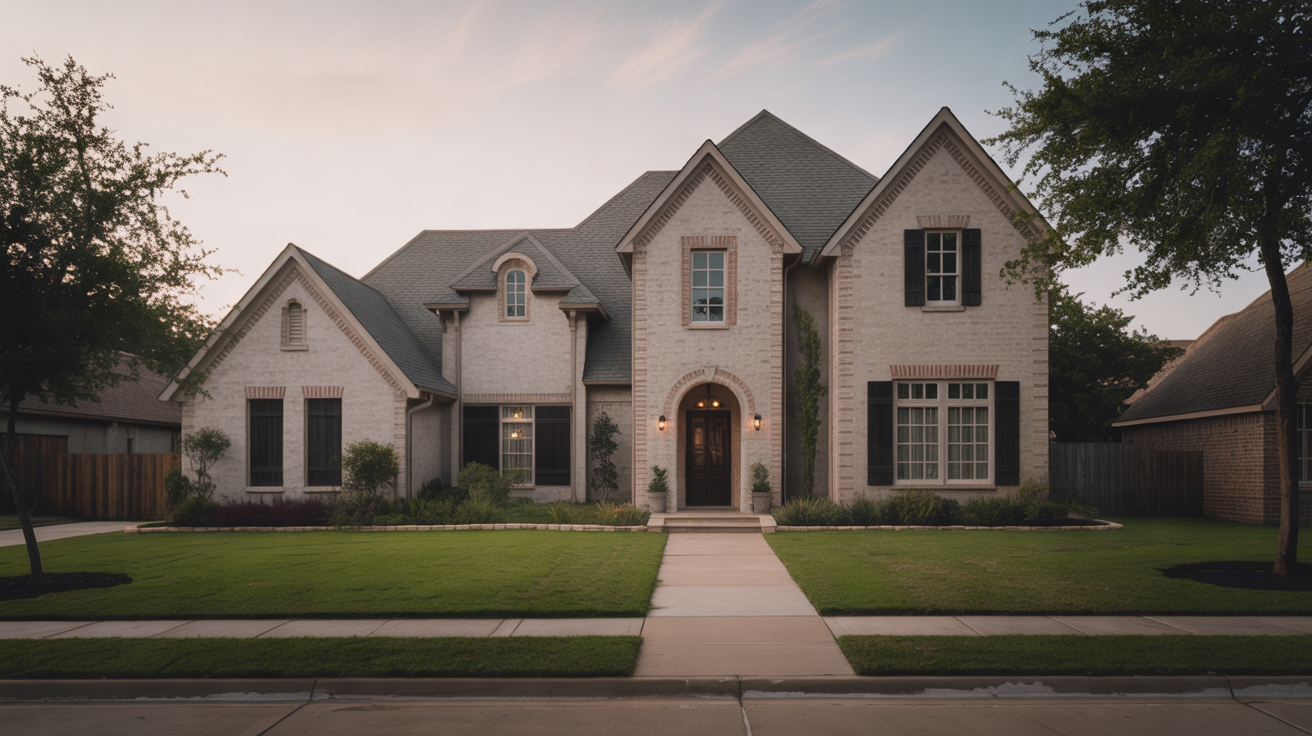
For most Carrollton owners the cleanest path is still selling first and rolling the proceeds into the next house, because Texas law caps how much equity you can borrow against your homestead and today's rates make carrying two payments expensive.
Start with a current value, not what you saw on a listing site two years ago. Carrollton values have softened. The average home value sits near $409,845, down about 3.2 percent over the past year, with median figures landing around $412,000, also slightly down.
The market itself is still functional and reasonably tight. Homes are moving in around 35 days, inventory sits near 2.4 months of supply, and properties have been selling at roughly 98.4 percent of asking. That is a market where a well-priced house sells, which is what matters when you need your sale to fund your purchase.
Your usable equity is current value minus what you owe minus selling costs. That last piece is the one people skip, and it is real money.
This is where Texas is genuinely different, and it is worth knowing before you plan around a HELOC. Section 50(a)(6) of Article XVI of the Texas Constitution caps all home equity debt on a homestead at 80 percent combined loan-to-value. Texas is the one state where that ceiling sits in the constitution rather than in a lender guideline, which means no lender, program, or investor can go past it regardless of your credit.
Two more rules that come with it: a 12-day waiting period between application and funding, and a one-loan rule limiting you to one home equity loan or HELOC at a time on your primary residence.
Run what that means. On a $412,000 Carrollton home, 80 percent is $329,600. If you owe $250,000, the most total debt you can carry is $329,600, so roughly $79,600 is accessible before costs. That can be a down payment. It is usually not enough to buy a bigger house outright while keeping the first one.
Selling first is the conservative and usually correct choice right now. You know your exact proceeds, you make a clean offer without a sale contingency, and you are not carrying two mortgages at rates in the mid-7s. The cost is the logistics of where you live in between, which is solvable with a leaseback or a short-term rental.
Buying first works if you can genuinely carry both payments without strain and you are competing for something scarce. In a market with 2.4 months of supply and homes selling at 98.4 percent of asking, the pressure to win at any cost is lower than it was, which weakens the case for taking that risk.
The middle path is a sale contingency. Sellers accept them more readily in a balanced market than in a hot one. It costs you some negotiating strength and it is far cheaper than guessing wrong.
This is the part worth doing on paper before you tour anything. Picture an owner with a $412,000 Carrollton house, a $250,000 balance at a rate from a few years ago, and roughly $130,000 in proceeds after costs. They want a $600,000 house.
Put $130,000 down and the new loan is $470,000. At rates in the mid-7s, that payment plus Carrollton-area taxes and insurance is going to be substantially more than what they pay today, not because they borrowed much more but because the rate on the new money is higher than the rate they are giving up.
That is the real trade-up math in 2026, and it is why the honest first step is a payment number rather than a house search. Ask a lender for the full monthly figure including taxes and insurance at your actual proceeds, then decide whether the bigger house is worth it. Plenty of Carrollton owners run that math and decide to renovate instead, which is a legitimate answer.
If you want a real proceeds estimate on your Carrollton house before you talk to a lender, that is a straightforward place to start.
You can, within the 80 percent combined loan-to-value cap, and lenders will count that HELOC payment against your debt-to-income on the new purchase. Confirm with your lender that they will allow it before you plan around it.
It is an agreement where you sell your house and rent it back from the buyer for a short period after closing. It gives you your proceeds and time to close on the next house without moving twice.
Most homeowners do not. If you lived there two of the last five years, a large portion of gain is generally excluded, $250,000 single or $500,000 married filing jointly. Confirm your specific situation with a CPA.
It solves the timing problem and costs real money in fees and interest. Look at it when you genuinely cannot sell first, not as a default. Compare the total cost against a sale contingency before deciding.
Often, yes, when you are giving up a much lower mortgage rate. If the issue is space rather than location or layout, price a renovation and compare it to the full new payment before you list.
Get a straight answer on pricing, timing, and what it would take to get you moved.
Schedule a Free ConsultationAI-assisted research and drafting, reviewed and approved by Ben Jimenez before publishing.
 Ben Jimenez