 By Ben Jimenez
·
Plano, TX
·
October 14, 2026
By Ben Jimenez
·
Plano, TX
·
October 14, 2026
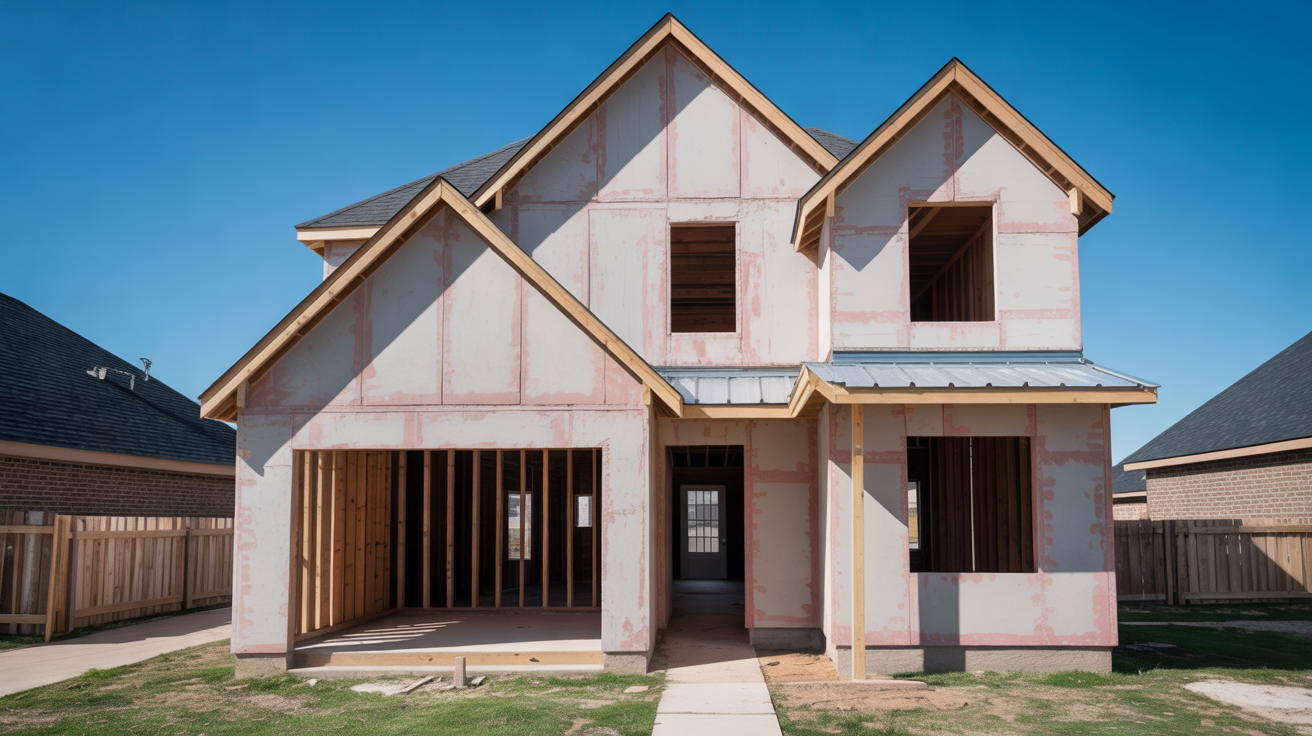
BRRR works mechanically in Plano, but the step that decides whether you can do it twice is the refinance, and current lending rules are tighter than the strategy's reputation suggests. Understand the seasoning and loan-to-value limits before you buy, because those two numbers determine how much cash you get back.
Buy below market, usually with short-term money because a conventional lender will not fund a house that needs real work. Rehab to a condition that appraises well and rents easily. Rent it, because the refinance lender wants to see a lease. Refinance into long-term debt and pull your capital back out. Then repeat with that capital.
The theory is that step four returns most of your money so step five costs you nothing new. In practice step four returns less than investors plan for.
These are the numbers that govern the outcome:
One Texas point worth being precise about. The Texas Constitution's 80 percent cap under Section 50(a)(6), along with its 12-day waiting period and one-loan rule, applies to your homestead. An investment property is not your homestead, so that constitutional cap is not what limits you there. The 75 percent figure is the agency limit, and it is the one that binds.
Run it. Say you buy a dated Plano house for $400,000, put $60,000 into it, and it appraises at $520,000 after the work. At 75 percent LTV your new loan is $390,000. You are into the deal for $460,000 plus closing and holding costs. The refinance hands back $390,000, which leaves $70,000 or more of your capital still in the property.
That is a normal BRRR outcome at current LTV limits, not a failure. But it is not the "pull all your money out" version people describe. To get close to that, your all-in cost has to land near 70 to 75 percent of the after-repair value, and in Plano, where the median sits around $490,000 and the average price runs near $682,000, finding that spread is genuinely hard. Plano is a strong, well-kept market. Strong, well-kept markets have fewer deeply discounted houses.
Three places, and capital is only the first one.
First, leftover capital. If each deal strands $70,000, your third deal is a long way off. Second, the appraisal. Your entire return depends on an opinion of value you do not control, and an appraisal $30,000 under your projection takes roughly $22,500 out of your refinance proceeds at 75 percent LTV. Third, debt-to-income on conventional loans. Each new mortgage counts fully against your ratio while only part of the rental income counts for you, which is why scaling investors move toward DSCR lending where the property qualifies itself.
The practical version of BRRR in a market like Plano is that it recycles a good portion of your capital and shortens the time between purchases. That is genuinely valuable. It is not an infinite money loop, and underwriting it as one is how investors end up stuck holding one property with no cash left.
If you are looking at a specific Plano property for this, the after-repair value estimate is the number worth pressure-testing first. Everything downstream depends on it.
Just how people count the steps. BRRRR spells out buy, rehab, rent, refinance, repeat. BRRR folds the repeat into the cycle. Same strategy either way.
Usually not if the house needs significant work, since conventional lenders require habitable condition. Most investors use hard money or a private lender first, then refinance into conventional or DSCR debt after the rehab.
For most lenders on an investment property, yes, or at least under a signed lease. The rental income is part of how the loan qualifies, especially on DSCR products where the rent versus the payment is the test.
Very. At 75 percent LTV, every dollar of ARV you miss costs you 75 cents of refinance proceeds. Build the estimate from closed comparable sales in the same neighborhood, not from listing prices.
It is the harder path to start on. You are managing a renovation, a short-term loan, a lease-up, and a refinance all at once. Many investors do better buying one stable rental first and attempting BRRR on deal two or three.
Get a straight answer on pricing, timing, and what it would take to get you moved.
Schedule a Free ConsultationAI-assisted research and drafting, reviewed and approved by Ben Jimenez before publishing.
 Ben Jimenez